January 04 2026
Court-Approved Parenting Course Online: What You Need to Know
You've received a court order requiring parenting education. Now what?
If you're searching for a court-approved parenting course online, you're not alone. Thousands of parents each month need to complete this requirement—and most prefer the convenience of online completion over traditional classroom settings.
This guide answers the most common questions about court-approved online parenting courses and helps you choose a program that meets your legal requirements.
What Does "Court-Approved" Actually Mean?
Here's something most people don't realize: there isn't always an "official list" of approved courses.
The Reality of Court Approval
How it actually works:
In most jurisdictions, courts require parenting education that:
Covers specific statutory topics (child development, communication, conflict management)
Provides a certain number of instructional hours (typically 4-6 hours)
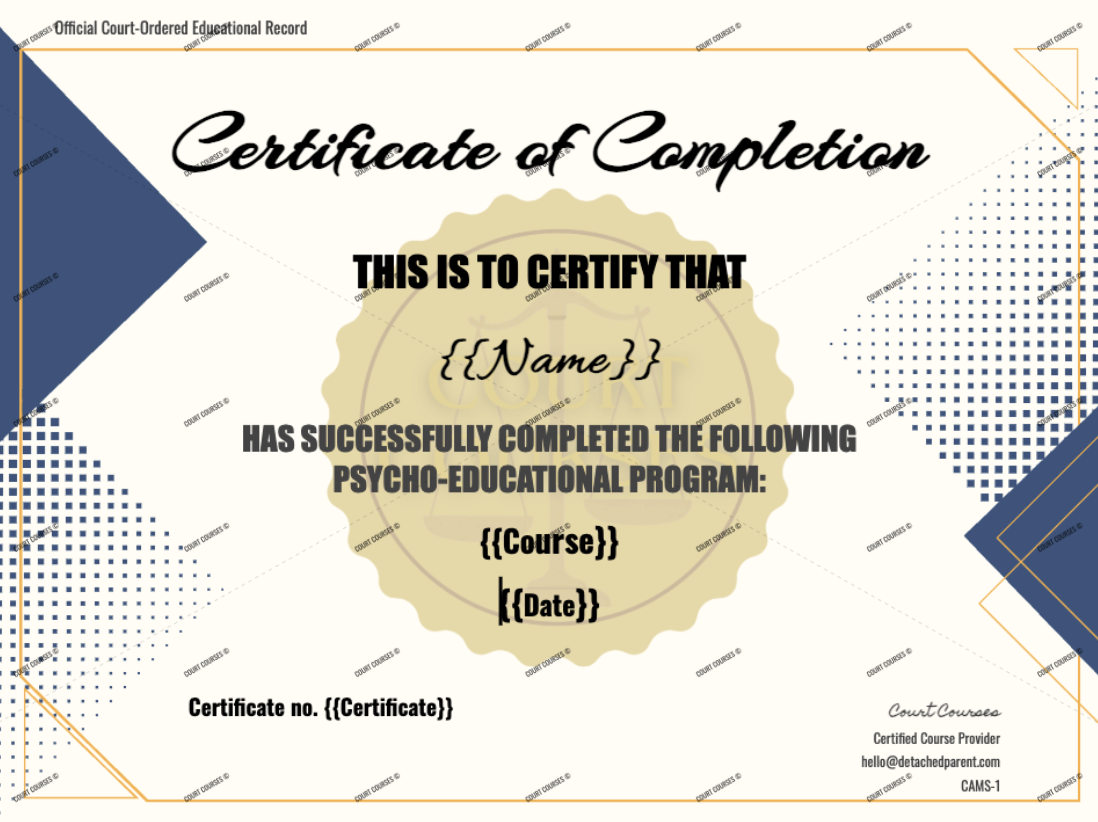
Issues a completion certificate with required information
Follows state guidelines for divorce/custody education
What "approval" means:
Course curriculum aligns with state requirements
Certificate includes legally required elements
Format (online or in-person) is acceptable to the court
Provider is legitimate and established
Important: Courts evaluate whether your certificate meets requirements when you submit it—not whether the provider is on a pre-approved list (which often doesn't exist).
What Courts Look For in Your Certificate
When you submit your completion certificate, courts verify:
✓ Your full legal name matches court records
✓ Course covered required topics
✓ Completion hours meet minimum requirement
✓ Completion date is within ordered timeframe
✓ Certificate appears legitimate and professional
✓ Provider information is included
Are Online Parenting Courses Accepted by Courts?
Yes—in most cases. Online parenting courses have become widely accepted, especially post-2020.
Online vs. In-Person: What Courts Think
Before 2020:
Many courts required in-person attendance
Online options were limited
Some judges were skeptical of digital courses
Now in 2026:
Most courts explicitly allow online completion
Digital certificates are standard
Many courts prefer online submission
Judges recognize online education quality
When Online Might NOT Be Accepted
Rare situations where in-person may be required:
Specific judge orders in-person attendance
High-conflict cases with additional requirements
Domestic violence situations requiring supervised learning
Jurisdictions with outdated policies (increasingly rare)
Pro tip: If your court order doesn't specify "in-person only," online courses are typically acceptable. If you're unsure, ask your attorney or call the court clerk.
How to Choose the Right Online Parenting Course
Not all online parenting courses are created equal. Here's what to look for:
1. Curriculum Requirements
Must cover:
Child development across age groups
Impact of divorce/separation on children
Co-parenting communication strategies
Conflict resolution techniques
Creating effective parenting plans
Legal concepts (custody types, visitation)
Domestic violence and child safety
Red flags:
Course too short to cover material adequately
Generic relationship advice instead of parenting focus
Missing required topics for your state
No mention of legal compliance
2. Hour Requirements
Common requirements:
4 hours - Most common minimum (California, Florida, many others)
6 hours - Required in some jurisdictions (parts of Texas, Arizona)
8-12 hours - Rare, usually high-conflict cases
Important: Your course hours must meet or exceed what your court ordered. Taking a 4-hour course when 6 hours are required won't count.
3. Certificate Requirements
Your certificate MUST include:
Your full legal name (as it appears in court documents)
Course name and provider
Number of instructional hours completed
Date of completion
Provider contact information
Professional appearance
Bonus features:
Case number field (some courts require this)
Digital download (immediate access)
Replacement certificate option
Secure verification system
4. Course Format and Features
Look for:
✓ Self-paced learning (complete on your schedule)
✓ Save progress feature (pause and resume)
✓ Mobile-friendly (access on any device)
✓ Clear video or written instruction
✓ Quizzes to check understanding
✓ Unlimited assessment attempts
✓ 24/7 access
✓ Technical support
Avoid:
✗ Scheduled live sessions (defeats purpose of online)
✗ Group participation requirements
✗ Limited time window to complete
✗ Single-attempt tests (what if you have technical issues?)
✗ No customer support
5. Legitimacy and Credibility
Signs of a legitimate provider:
Professional website and materials
Clear contact information
Responsive customer support
Established track record (check reviews)
Transparent about what's included
Secure payment processing
Privacy policy
Red flags:
No contact information or support
Unrealistic promises ("finish in 30 minutes!")
Sketchy payment systems
No refund/support policy
Generic certificates
Requests for unnecessary personal information
Common Questions About Online Parenting Courses
"Will the judge actually accept my online certificate?"
Yes, if your course meets requirements. Courts care that you:
Completed legitimate parenting education
Learned required material
Received proper documentation
Met hour requirements
Thousands of parents submit online course certificates monthly without issues.
"How long does it actually take?"
Honest answer:
4-hour course: 4-5 hours (including assessments)
6-hour course: 6-7 hours (including assessments)
Can you finish faster? Some people rush through, but you'll need to:
Watch/read all content
Pass quizzes (usually 80% minimum)
Complete final assessment
Actually learn the material (it helps!)
Most people complete in 1-2 sittings.
"What if I fail the final test?"
Legitimate courses allow unlimited retakes. You can:
Review material where you missed questions
Retake as many times as needed
No additional fees for retakes
If a course only allows one attempt, that's a red flag.
"Can I take breaks during the course?"
Yes. Quality online courses let you:
Save your progress automatically
Log out and return anytime
Complete at your own pace
Access for 30-60 days typically
You don't need to finish in one sitting.
"Do I need to talk to anyone or join live sessions?"
No. True online courses are:
100% self-paced
No live calls or video meetings
No group participation
Completely private
Anonymous learning
If a course requires live interaction, it's not truly self-paced.
"What happens after I complete the course?"
Typical process:
Pass final assessment (80% usually required)
Certificate generates immediately
Download/print your certificate
Submit to court (usually via online portal or physical filing)
Court marks requirement complete in your case
Timeframe: Most people have their certificate within hours of completion.
"What if my court rejects my certificate?"
Rare, but if it happens:
Contact the course provider for support
They can provide additional documentation
Adjust certificate format if needed
Explain course compliance to court
Reality: This almost never happens if you chose a legitimate course that meets hour requirements.
State-Specific Considerations
While online courses work nationwide, some states have specific nuances:
High-Volume States
California:
4 hours minimum in most counties
Family Code Section 3170 requirements
Some counties prefer 6 hours
Online widely accepted
Texas:
Requirements vary by county
4-6 hours typical
Must cover specific statutes
Check your specific court order
Florida:
Parent Education and Family Stabilization Course
4 hours required
Online explicitly allowed
Certificate to clerk of court
New York:
4 hours minimum
Must cover developmental stages
Online accepted statewide
Submit through attorney typically
Pennsylvania:
Requirements vary by county
2-4 hours common
Educational focus required
Online generally accepted
Always Check Your Specific Order
Court orders vary even within the same state. Read your order carefully for:
Required hours
Deadline for completion
Any specific provider requirements
Submission instructions
When in doubt, call the court clerk or ask your attorney.
Red Flags: Courses to Avoid
⚠️ Too-Good-To-Be-True Claims
Avoid courses that promise:
"Complete in 15 minutes!" (impossible to cover material)
"No test required!" (courts expect assessment)
"Guaranteed acceptance!" (no one can guarantee this)
"Skip the course, just buy certificate" (illegal)
⚠️ Suspiciously Cheap
While you don't need to overpay, extremely cheap courses ($10-20) often:
Provide inadequate content
Issue unprofessional certificates
Have no support
May not be legitimate
⚠️ No Real Provider Information
Legitimate providers have:
Physical address or clear business entity
Phone number and email support
Actual humans who respond
Professional online presence
If you can't find who's behind the course—avoid it.
What Makes a Quality Online Parenting Course
Beyond meeting legal requirements, quality courses provide:
Practical, Real-World Education
Good courses teach:
Age-appropriate expectations for children
How kids actually experience divorce (not theory)
Communication scripts you can use today
Conflict de-escalation techniques that work
How to create sustainable parenting plans
What courts actually care about
Poor courses offer:
Generic advice
Outdated information
Preachy judgment
Unrealistic ideals
Professional Instruction
Look for courses with:
Clear, organized content
Professional video or written materials
Easy-to-understand explanations
Examples and scenarios
Practical application
Respect for Your Situation
Quality courses recognize:
Every family situation is different
You're going through a difficult time
The goal is helping your children, not judging you
Practical help matters more than ideology
Cost Considerations
What you're paying for:
Course development and maintenance
Secure platform and technology
Certificate generation
Customer support
Legal compliance research
Is It Worth It?
Consider the alternatives:
In-person class: Often $75-150 + travel time/costs
Not completing: Contempt of court, fines, custody implications
Cheap/sketchy course: Risk of rejection, having to retake
Bottom line: Investing in a legitimate online course saves time, money, and stress compared to alternatives.
How to Submit Your Certificate
Common Submission Methods
1. Online Court Portal (most common now)
Log into court system
Upload PDF of certificate
Confirm submission
Receive confirmation email
2. Through Your Attorney
Email or provide physical copy
Attorney files with court
Attorney confirms completion
3. Court Clerk (less common)
Visit clerk's office or mail
Provide physical copy
Request file-stamped copy for records
Always keep:
Digital copy of certificate
Proof of submission (confirmation email/receipt)
Physical backup copy
Timeline: When to Take Your Course
Court-Ordered Deadline
Most orders require completion within:
30 days - Common in California
45 days - Many Texas counties
60 days - Florida standard
Before final hearing - Some jurisdictions
Getting Started
Steps to Complete Your Requirement
1. Understand your specific requirements
Read your court order carefully
Note required hours
Check deadline
Confirm online is acceptable (usually yes)
2. Choose a legitimate course
Verify curriculum covers required topics
Confirm hours meet requirement
Check reviews and legitimacy
Ensure certificate meets standards
3. Enroll and complete
Start as soon as possible
Take breaks as needed
Focus on learning (it actually helps)
Pass assessments
4. Get your certificate
Download immediately
Save multiple copies
Print if needed
5. Submit to court
Follow court-specific process
Keep proof of submission
Confirm receipt
6. Keep records
Save certificate permanently
Keep submission proof
Store in case file
Final Thoughts
Completing a court-ordered parenting course doesn't have to be a burden. With the right online course, you can:
✓ Complete on your schedule
✓ Learn genuinely helpful information
✓ Meet your legal requirement
✓ Focus on what matters: your children's wellbeing
Most importantly: This education can actually improve your co-parenting relationship and help your children navigate this transition more successfully.
The courts require this for a reason—children of parents who understand child development and practice effective co-parenting communication do significantly better after separation.
Ready to Complete Your Requirement?
Available in English, Spanish, and Chinese.
Disclaimer: The information in this article is for educational purposes and does not constitute legal advice.
Always consult with your attorney or court clerk regarding specific requirements for your case and local court requirements.

Don't worry. I hate spam too.